
This post contains affiliate links. If you buy through them, we may earn a small commission at no extra cost to you.
A gratitude journal is one of the simplest habits you can start: a notebook, a pen and about five minutes. You do not need to be a “writer”, and you do not need to feel positive all the time. The goal is simply to notice, once a day or once a week, a few things that went well or that you appreciate.
This guide explains what a gratitude journal is, what research suggests about it, how to start in three easy steps, and gives you 25 prompts for the days when the page feels blank.
What is a gratitude journal?
It is a regular, short piece of writing about people, things and moments you feel thankful for. Psychology researchers describe gratitude journaling as writing on a regular basis about things, people and events you feel explicitly grateful for. It can be a list of three lines or a full paragraph. Both count.
What does research say about it?
Studies have linked gratitude practices to better mood and life satisfaction, and some to better sleep and lower stress. Results vary from person to person, and effects tend to build with regular practice rather than appear overnight. Think of it as a gentle habit that supports your wellbeing, not a treatment. If you struggle with persistent low mood or anxiety, please talk to a doctor or therapist.
How to start in 3 steps
1. Choose your journal
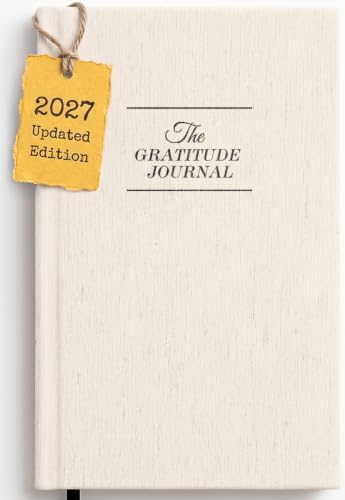
Any notebook works. Some people like a simple lined notebook, others prefer a guided gratitude journal with daily prompts. You can also use a notes app, but many people find handwriting slower and more mindful. If you would like a ready-made option, browse gratitude journals on Amazon.
2. Pick a time and attach it to a habit
Link it to something you already do: your morning coffee, brushing your teeth, or your bedtime routine. Evenings suit many people, because you can look back at the day. If you like a calm start instead, pair it with a morning meditation routine.
3. Start small and be specific
Write down three things. Specific beats general: “my neighbour carried my shopping up the stairs” is more powerful than “I’m grateful for people”. Include why it mattered to you. Aim for two or three minutes, not an hour.
25 gratitude journal prompts
Everyday moments
- What made me smile today?
- What is something small I usually take for granted?
- What was the best thing I ate or drank today?
- What is something beautiful I noticed today?
- What did my body help me do today?
People
- Who made my day easier, and how?
- Who am I thankful to have in my life, and why?
- Who could I thank this week?
- What is a kind thing someone said to me recently?
- Which friend or family member would I like to call?
Home and comfort
- What in my home makes me feel safe or cosy?
- What is a simple comfort I enjoyed today (a warm blanket, a hot drink)?
- What part of my daily routine do I enjoy most?
- What is something in my space I am glad I have?
- Which season or time of day do I love, and why?
Hard days
- What helped me get through today?
- What is one thing that went better than I expected?
- What is something difficult I handled well?
- What did I learn this week?
- What is one thing I can let go of tonight?
Looking ahead
- What am I looking forward to?
- What small thing could I do tomorrow to feel good?
- What skill or hobby am I glad to be learning (for example, an easy knitting project)?
- What is one hope I have for the coming month?
- What would I like to remember about this year?
Handy picks for your gratitude practice

Tips to make it stick
- Be honest, not forced. On hard days, “I’m grateful for a warm bed” is enough.
- Avoid repeating the same items. Look for new details each time.
- Reread it. Flipping back through old pages on a tough day can be surprisingly comforting.
- Do not aim for perfection. Missing a day is fine. Just start again.
- Pair it with calm. A few slow breaths first, such as the ones in our breathwork guide, can help you settle before you write.