
This post contains affiliate links. If you buy through them, we may earn a small commission at no extra cost to you.
Fresh herbs in winter are one of the nicest small comforts: a pot of basil on the windowsill, a snip of parsley on your soup. You do not need a garden or special skills. What you do need is some light, a good pot and a little patience.
This guide covers which herbs do best indoors, how to give them enough light in the darkest months, and simple care tips.
Light is the main challenge
Most culinary herbs come from sunny places, and light is typically the biggest limit to growing them indoors. Place pots in your brightest window, usually south-facing in the Northern Hemisphere. If your window is dim, or days are very short, a small grow light is a good fix. A compact LED grow light for herbs placed above the plants for several hours a day can make a big difference. Rotate your pots now and then so the plants grow evenly.
Keep leaves from touching cold window glass overnight, because they can get chilled.
Easiest herbs to grow indoors
- Basil: loves warmth and light, likes evenly moist soil.
- Chives: forgiving, good for sunny windows.
- Parsley: slower to start, but steady once growing.
- Mint: very easy. Grow it in its own pot because it spreads.
- Thyme and oregano: compact and like drier soil.
- Cilantro: fast but short-lived, so sow every few weeks.
Rosemary, sage and lemon balm can also work, but they often need brighter light and more attention to pests.
What you need
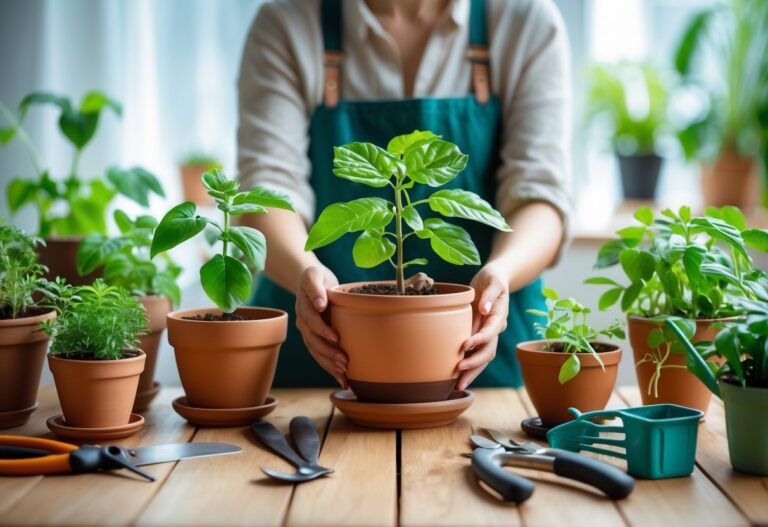
- Pots with drainage holes and saucers to protect surfaces.
- Quality potting mix. Use potting soil, not garden soil, which is usually too heavy and may carry pests.
- Seeds or young plants. Starter plants from a shop give faster results than seeds.
- A small watering can.
For a ready set, you can look at indoor herb garden starter kits.
Handy picks for your indoor herbs


Step-by-step setup
- Fill clean pots with potting mix, leaving a little space below the rim.
- Plant seedlings at the same depth as in their original pot, or sow seeds following the packet.
- Water gently until it drains from the bottom, then empty the saucer.
- Put pots in your brightest spot or under a grow light.
- Check the soil with your finger every few days. Water when the top inch feels dry.
Care tips for winter
- Do not overwater. Soggy soil is the most common cause of failure.
- Trim often. Regular snipping keeps plants bushy and delays flowering, which reduces flavour.
- Add humidity if the air is dry. Heating dries the air. Grouping pots or misting lightly can help.
- Go easy on fertiliser. Plants grow slowly in winter, so feed lightly if at all.
- Harvest a little at a time. Take leaves from the top, never more than about a third of a plant at once.
Take cuttings from your outdoor herbs
Before the first hard frost, you can take cuttings from garden herbs such as basil, mint, sage and oregano and root them for a head start indoors.
A calming winter ritual
Caring for plants is a gentle way to slow down. Spend a few minutes each morning checking your herbs, smelling the leaves and noticing new growth. It pairs nicely with our sensory winter garden ideas and our radical rest guide.


[…] How to Grow Herbs Indoors in Winter: A Beginner’s Windowsill Guide […]