This post contains affiliate links. If you buy through them, we may earn a small commission at no extra cost to you.
A knitted dishcloth is a perfect second project once you can knit a simple scarf. It is small, quick and useful, so mistakes do not matter and you can finish it in an evening or two. Cotton cloths are also absorbent and washable, which makes them a lovely handmade gift.
This tutorial uses only the knit stitch (garter stitch), cast on and bind off, so you can follow it even if you have just learned the basics.
What you need
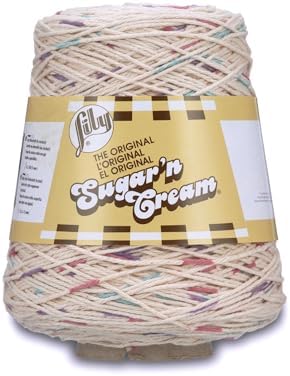
- Cotton yarn. Choose 100% cotton in a worsted or aran weight, because cotton absorbs water and holds up to washing. Look for a kitchen cotton such as 100% cotton worsted yarn. One ball usually makes more than one cloth.
- Needles. Around 4 to 5.5 mm (US 6 to 9) is typical. Check the yarn label for a suggested size. A basic set such as a beginner knitting needle set covers it.
- A tapestry needle and scissors.
For help choosing supplies, see our guide to knitting starter kits for beginners.
Handy picks for your dishcloth


Size and stitch count
A typical dishcloth is about 10 x 10 inches (25 cm). Many beginner patterns cast on between 30 and 40 stitches, depending on the yarn and needles. Cast on about 35 stitches, knit a few rows and measure. If the cloth will be too narrow or too wide, adjust the count. Cotton does not stretch like wool, so you may need a little extra width.
Step-by-step instructions
1. Cast on
Make a slip knot and cast on 35 stitches. A long-tail cast-on gives a neat, stretchy edge. Keep the stitches loose enough to slide.
2. Knit every row
Knit all stitches across the row, then turn the work and knit all stitches again. Every row is a knit row, and this makes garter stitch. It is flat, reversible and does not curl, which is ideal for a dishcloth.
3. Keep your edges tidy (optional tip)
Slipping the first stitch of every row, as if to knit, gives a neater edge. If that is confusing, simply knit every stitch as usual. You can try the slipped edge on your next cloth.
4. Count and measure
Count your stitches every few rows. When the cloth is roughly square (as long as it is wide, when laid flat), you are ready to bind off. This takes about 60 to 70 rows with common cotton yarns, though it depends on your yarn and tension.
5. Bind off
Knit two stitches, lift the first over the second, then knit one and repeat until one stitch remains. Cut the yarn, pull the tail through and tighten. Keep the bind-off loose so the cloth stays square.
6. Weave in the ends
Use the tapestry needle to weave each tail through the stitches on the back for a few centimetres, then trim. Wash the cloth once before using it. Cotton softens and shrinks slightly at first.
Easy ways to vary it
- Stripes: change colour every few rows.
- Textured border: knit the first and last few stitches of each row and purl the middle to make a smooth centre.
- Mitred or diagonal cloth: a fun next step, using increases and decreases.
- Gift set: make three in matching colours and tie them with a bar of soap. Our calm knitter’s Christmas gift list has more ideas.
Troubleshooting
- The cloth is getting narrower or wider. You are dropping or adding stitches. Count and fix, see our list of common knitting mistakes.
- It is too stiff. Switch to a larger needle or relax your grip.
- It curls at the edges. Garter stitch normally lies flat. If it curls, you may have purled some rows by mistake.
Care
Machine wash cotton dishcloths and dry them fully between uses. Replace them when they wear thin.