Mandalas are having a bit of a comeback lately. They offer a surprisingly straightforward way to manage stress and support mental wellness.
These circular designs, packed with symbolism and history, have been used in meditation and art therapy for ages. They help you focus, unwind, and maybe even find a bit of inner peace.
Using mandalas for stress relief brings together mindfulness and creativity, which honestly feels like a much-needed combo in today’s mental health landscape.
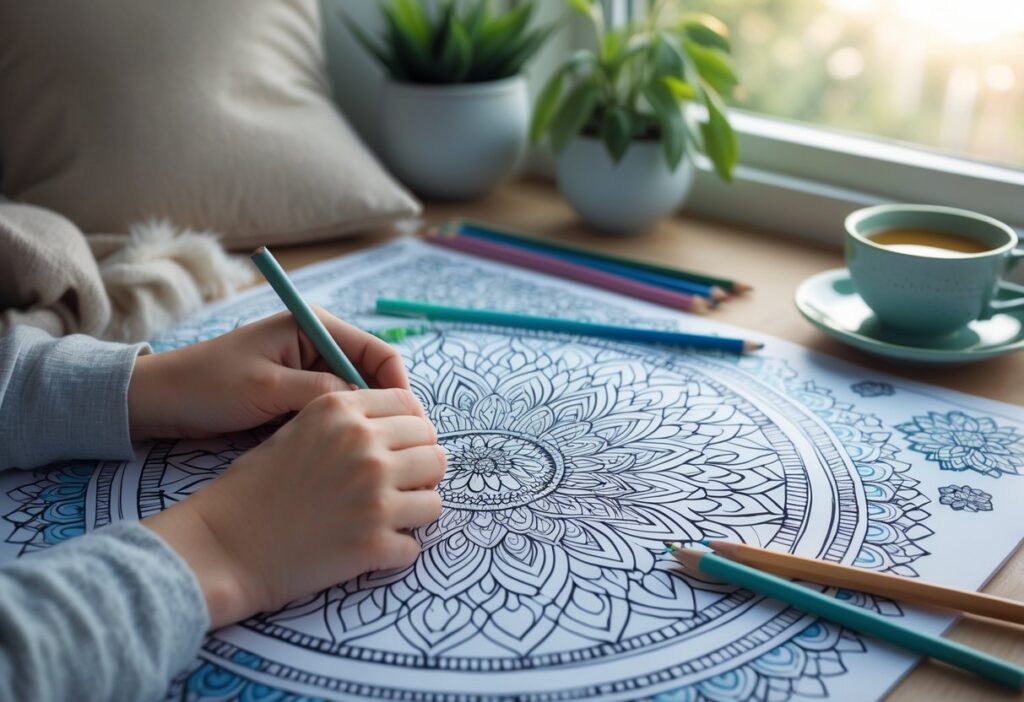
Whether you’re coloring, drawing, or just meditating with mandalas, you’re stepping into a calming practice. It encourages mindfulness and emotional balance—something we could all use more of, right?
Mandala art therapy lets you express feelings without having to talk it all out. It can settle anxious thoughts by gently centering your mind.
You don’t have to be an artist or a meditation pro to get something out of mandalas. They work as simple meditation tools and as a creative way to relax and stay present.
Maybe exploring mandalas is how you’ll add a mindful, artsy routine to your day. It’s a low-pressure way to ease stress and support emotional health, and honestly, it’s kind of fun.
Why Mandalas Are Trending Again — And Their Benefits for Stress Relief
Mandalas are catching attention in the mental wellness world for their calming effects and creative possibilities. They blend ancient spiritual roots with fresh, modern approaches to stress.
Using mandalas can help you focus, relax, and express yourself in ways that feel meaningful but not overwhelming.
Rising Popularity of Mandalas in Modern Mental Wellness Trends
You might spot mandalas in apps, therapy offices, or mindfulness workshops these days. There’s a real push for easy, affordable ways to relax and take care of yourself.
People want activities that don’t need fancy skills but still actually help with stress. The symmetrical, circular look of mandalas fits the current appetite for balance and calm.
They’re a neat blend of art and meditation, which makes them appealing for anyone seeking creative stress management.
Understanding Mandala Meaning in Contemporary Culture
Mandalas started out in spiritual traditions like Hinduism and Buddhism. They symbolized the universe, wholeness, and peace.
Now, their meaning’s expanded. Today, mandalas are more about focus and feeling whole than any single tradition.
In modern life, mandalas can help you reconnect mind and body. Working with them draws your focus to the present, which is honestly a relief in a world full of distractions.
This focus supports emotional balance and mental clarity, even if you’re not into meditation per se.
Evidence-Based Benefits of Mandalas for Stress Reduction
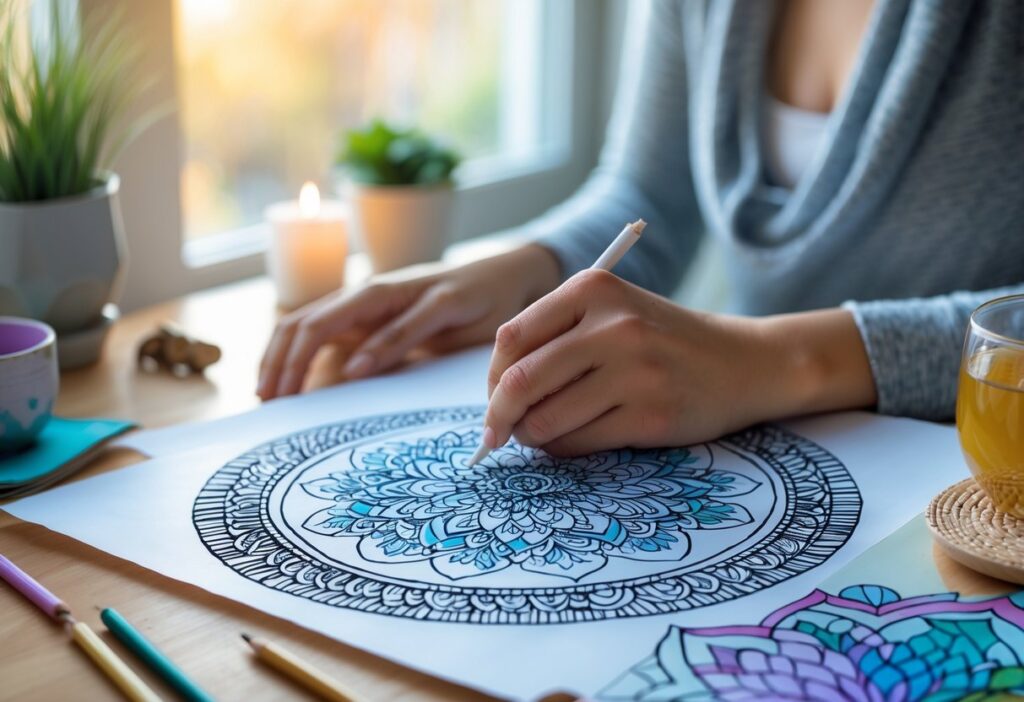
There’s actually research showing that making or coloring mandalas can lower anxiety and stress. When you zero in on those repeating patterns, your brain can slip into a relaxed, almost meditative state.
This helps quiet the mental noise and calms your nervous system. Engaging with mandalas taps into your parasympathetic nervous system—the one that helps you chill out after a long day.
The activity encourages mindfulness, which can lift your mood and build some mental resilience over time.
Mandala Art as a Tool for Creative Stress Relief
Using mandalas for stress is refreshingly simple and, honestly, pretty enjoyable. Coloring or drawing these patterns lets you get creative without worrying about perfection.
It gives your mind a focused, relaxing task—sometimes that’s all you need to break the cycle of worry. Mandalas also support your brain’s executive functions, like planning and flexibility.
For teens and adults, this can strengthen mental skills while dialing down stress. Whether you’re painting, doodling, or just filling in colors, the process is a gentle, absorbing way to handle everyday tension.
How to Use Mandalas for Mindfulness and Relaxation
Using mandalas is all about focused attention, a dash of creativity, and some simple rituals that help your mind unwind. You can interact with mandalas in a bunch of ways—quietly reflecting, coloring, or even creating your own from scratch.
Each approach helps train your focus and nudges your mind toward a more peaceful place.
Mindfulness Mandalas for Daily Calm
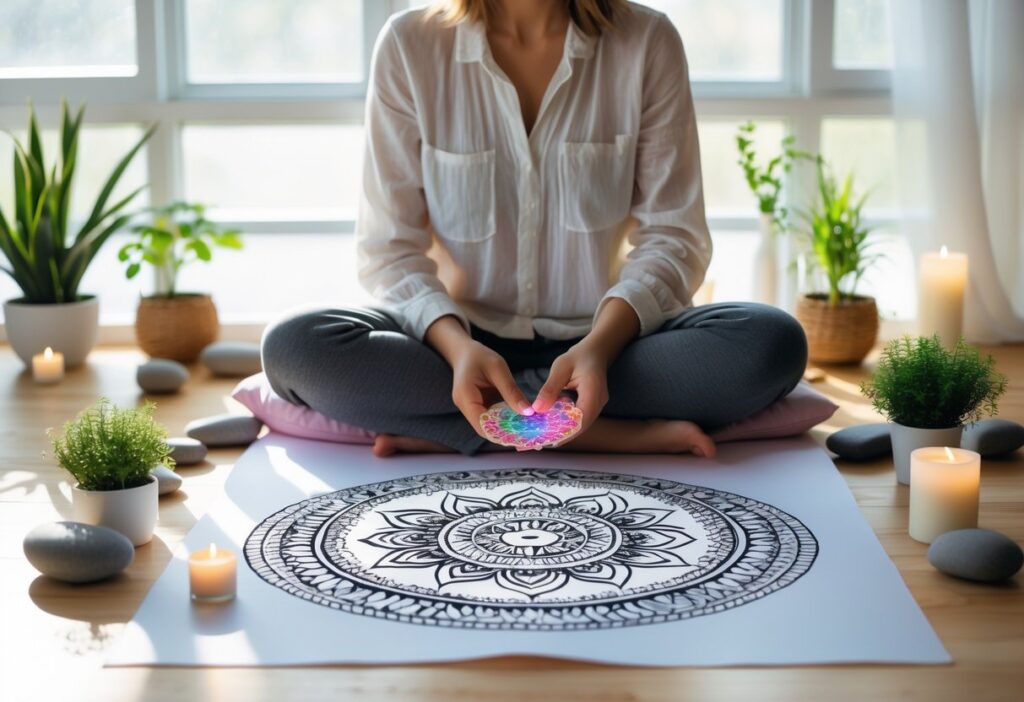
Mindfulness mandalas are made for tuning into the present. As you look at or make a mandala, your attention naturally settles on the shapes and patterns.
This can hush those distracting thoughts and ease nervous tension. You don’t have to be an artist to benefit—just a few minutes of focused attention can make a difference.
Pairing simple breath awareness with the visual structure of a mandala can help anchor your mind when it starts to wander.
Even a short daily practice—just looking at or making a mandala—can boost your ability to stay calm during stressful times. It’s not magic, but it’s surprisingly helpful.
Coloring Mandalas for Relaxation Techniques
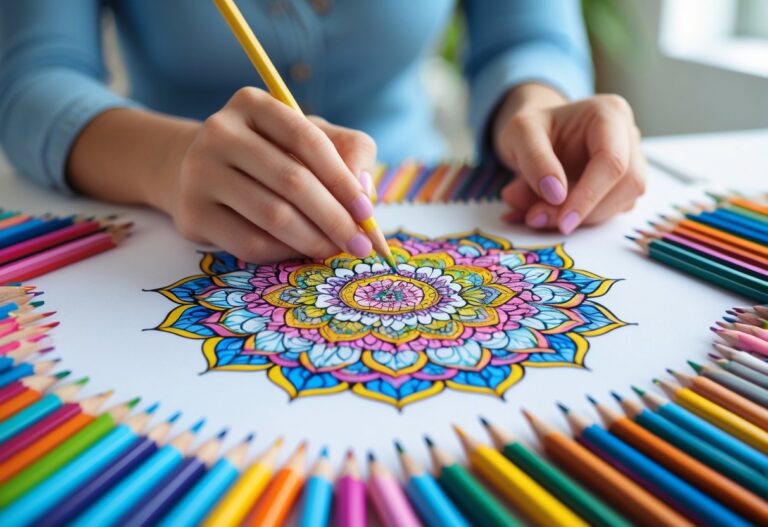
Coloring mandalas is about as straightforward as relaxation gets. The repetitive motion of filling in patterns can slow down your racing thoughts.
It nudges your focus away from worries and gives you a gentle sense of calm. To start, grab some colored pencils or markers and pick a mandala template you like.
Set up a quiet spot with decent lighting. Pay attention to the colors you choose and how they fill the spaces.
The process can actually lower stress hormones and hush your inner critic a bit. You might even notice your concentration and mood getting a subtle lift.
Mandala Art Therapy for Holistic Healing
Mandala art therapy is a creative way to explore feelings and encourage healing. Here, making mandalas becomes a tool for expressing what’s tough to put into words.
When you draw or paint mandalas with intention, you can surface subconscious emotions and gain some self-understanding. Psychologists sometimes use mandalas to support emotional balance.
Committing to this creative process can trigger your relaxation response. It’s not a cure-all, but it can complement other healing methods by connecting your mind, emotions, and body through creativity.
So, are mandalas a magic fix? Not quite. But they’re a genuinely enjoyable and accessible way to bring a little more calm and creativity into your life. Whether you’re coloring for five minutes or diving deep into art therapy, mandalas offer a gentle path toward stress relief and self-discovery. Maybe give it a try—you might be surprised by what you find.
Incorporating Mandalas in Meditation and Other Modern Mindfulness Practices
You can definitely weave mandalas into your meditation routine as a visual focus point. Staring at the center of a mandala has this oddly grounding effect—it anchors your thoughts and helps deepen concentration.
Honestly, it makes meditation feel a bit more approachable, especially if you have trouble sitting still or keeping your mind quiet. Sometimes, just having something beautiful to look at changes the whole vibe.
Mandalas have also found a place in mindfulness-based stress reduction programs. You might pair mandala viewing with slow breathing or even a guided meditation track.
This kind of mix can support emotional healing and reduce anxiety. It also helps clear your mind, nudging you toward a more mindful day-to-day experience.
All in all, bringing mandalas into your mindfulness practice isn’t just trendy—it’s genuinely useful. Why not give it a try and see if it shifts something for you?
Products Mentioned in This Guide: