When you color a mandala, the colors you pick really do echo your mood and emotions. Your palette acts like a mirror, showing what you feel inside and helping you understand your emotional state better.
This connection between color and feeling sits at the heart of mandala color psychology and art therapy. It turns your creative process into a way to explore and express what’s going on inside.
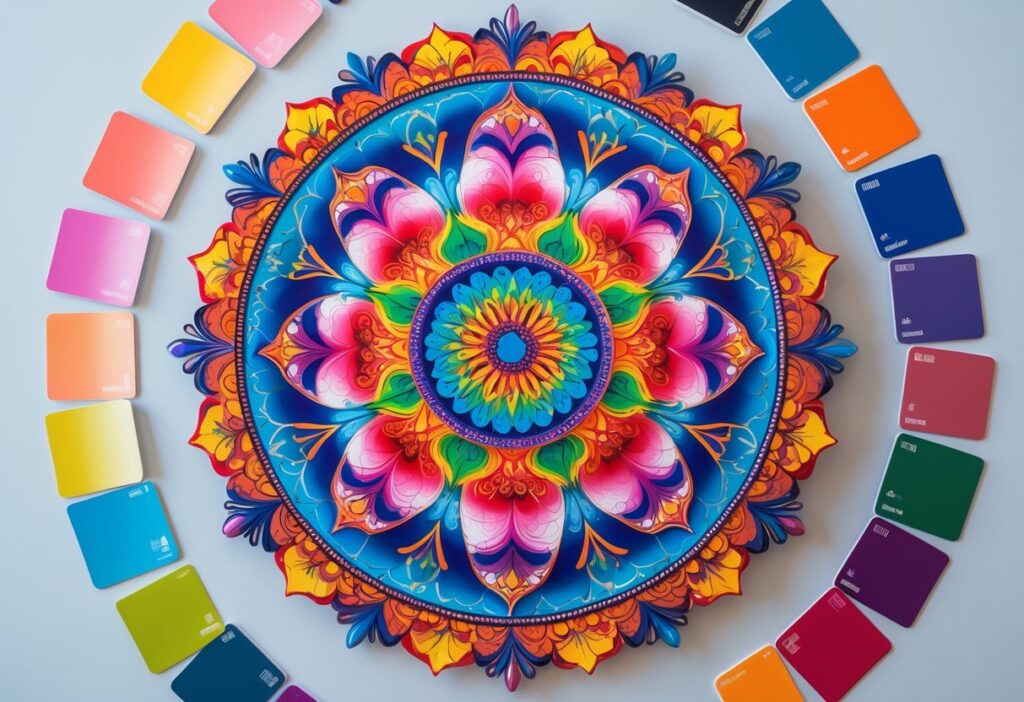
Using specific colors in your mandala can guide your mood toward calm, energy, or balance. Coloring mindfully supports stress relief and self-care by encouraging focus and presence.
As you work on your design, the symbolic meanings behind the colors and patterns can deepen your experience. This can offer both emotional release and healing, even if you didn’t expect it.
Your color choices become a form of personal expression and a healing tool. By noticing how certain colors affect your feelings, you engage in a creative practice that supports mindfulness and emotional growth.
This makes mandala art not just a visual activity, but a meaningful way to care for your mental well-being. It’s honestly kind of surprising how much a bit of coloring can do.
Colour-Coding Your Mandala: Palette Choices, Color Meanings, and Emotional Impact
The colors you pick for your mandala say a lot about your feelings and mindset. Each shade carries its own meaning and emotional effect.
How you combine colors can totally change your experience and the message your mandala sends. Sometimes it’s intentional, and sometimes it just happens.
Mandala Color Meanings and Symbolism
Colors in mandalas often link to specific symbols or ideas. For example, red can stand for energy or passion, while blue often suggests calm and peace.
Yellow may represent happiness and clarity. You can use colors based on what they mean to you personally, or follow traditional symbolism if that speaks to you.
This helps your mandala hold deeper significance. Using a chakra-inspired palette, for instance, connects colors to body energy centers and gives your design a spiritual focus.
Color Psychology and Mood in Mandala Art
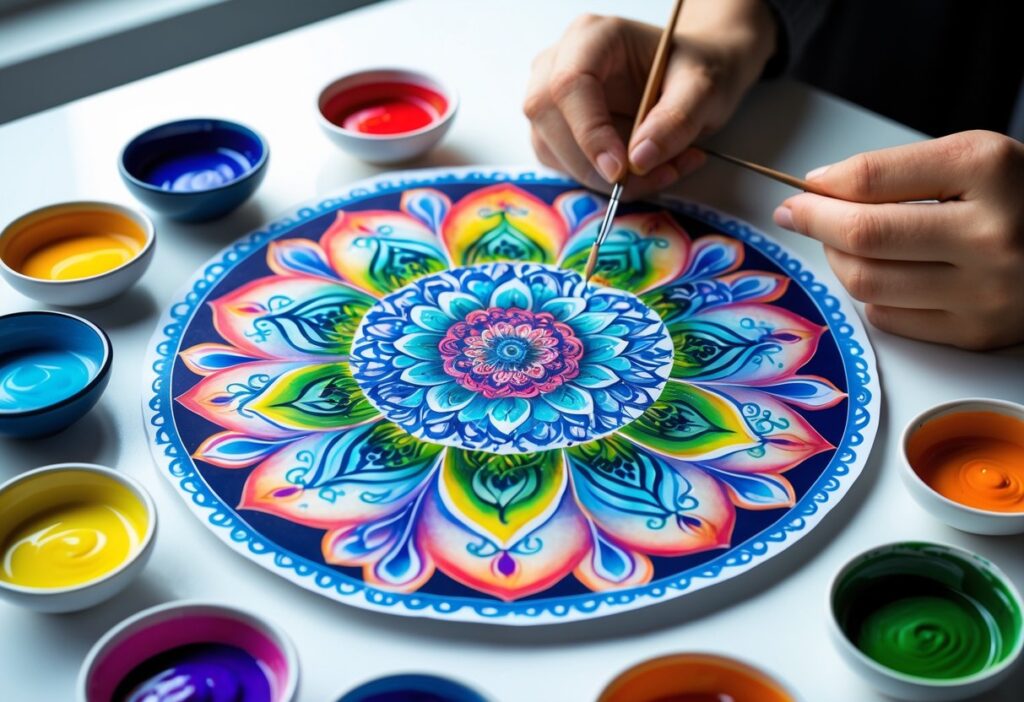
Colors affect how you feel as you create or look at your mandala. Warm colors like reds and oranges can boost energy or excitement.
Cool colors like greens and blues usually bring calm and relaxation. Your choice of color combinations also shapes your mood more than you might think.
Complementary colors (opposites on the color wheel) create contrast and can make your design lively. Analogous colors (next to each other) blend softly, making the mandala feel balanced and peaceful.
Expressing Emotions Through Mandala Coloring
Coloring a mandala lets you express feelings without words. If you feel joyful, you might go for bright, bold colors.
If you want comfort, soft or muted tones may suit you better. This act of coloring helps you explore emotions safely and at your own pace.
It can bring awareness to feelings you may not fully understand. You control how much energy or calm your mandala shows through your palette.
How Mandala Colors Influence Mood and Self-Perception
Your color choices impact how you view yourself while making art. Using vibrant colors can increase your confidence and creativity.
Gentle colors may help you relax and feel centered. Seeing your mandala can also shift your mood afterward, which is honestly pretty neat.
Bright, warm colors may lift your spirits. Subtle tones might soothe stress.
Choosing colors mindfully makes your mandala a tool for personal growth and healing, whether or not you set out with that goal.
Mandala Art Therapy: Mindfulness, Stress Relief, and Creative Self Care
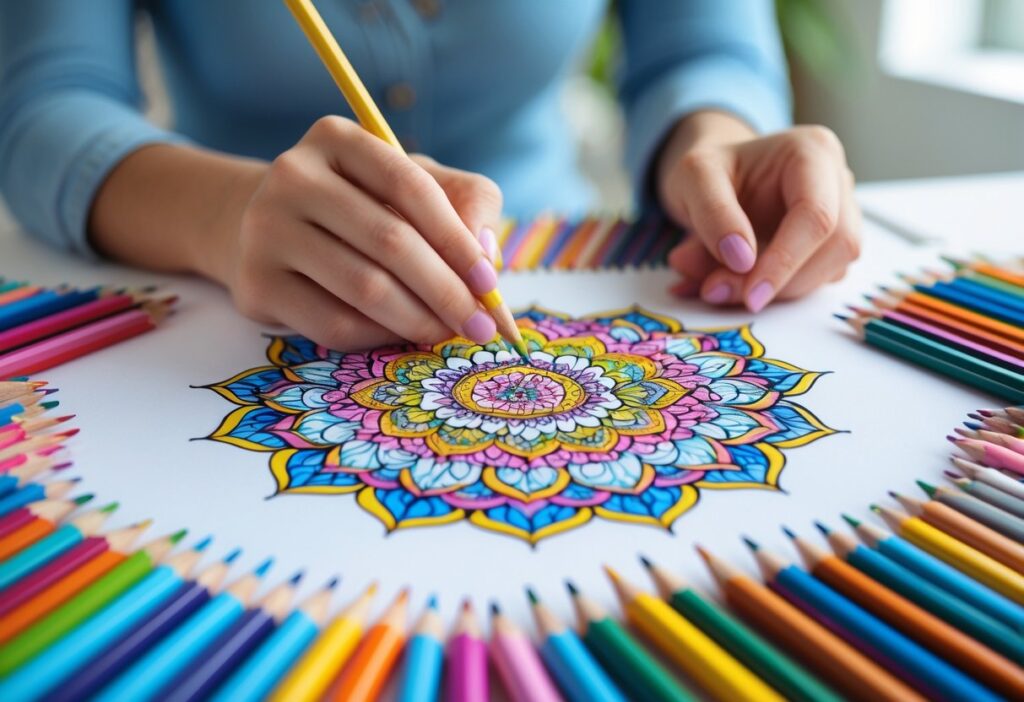
When you use mandalas for therapy, you tap into mindfulness, stress relief, and personal creativity. Your color choices and how you engage with the mandala all affect your mood and emotional balance.
This practice helps you focus, express feelings, and relax through art. It’s not always easy to quiet your mind, but coloring seems to help.
Using Colour-Coded Mandalas for Mindfulness Coloring
Color-coding your mandala encourages focused attention and awareness of your present feelings. When you choose colors based on your mood or emotions, you become more mindful of what you’re experiencing—even if you’re not sure what that is at first.
For example:
- Blue might represent calm or sadness
- Red can show energy or anger
- Yellow often stands for happiness or hope
As you color, concentrating on these choices brings a meditative quality. This process slows your thoughts and directs mental energy toward peaceful, steady breathing.
It creates a quiet moment where you’re fully in the present, which helps reduce anxiety. It’s a small but real way to ground yourself.
Stress Relief and Healing with Mandala Art
Mandalas offer a simple way to manage stress through visual patterns and color therapy. The circular shapes naturally guide your eyes around the design, helping to steady your mind and lower tension.
You can use mandala coloring as a calming ritual after a stressful event or whenever you feel overwhelmed. This act of creating something balanced and symmetrical can improve your mood and bring relief, even if it’s just a little.
Colors you select can also aid healing. Soft greens and blues often promote relaxation, while warmer tones like orange or pink encourage emotional expression.
Recognizing your own color preferences helps you better understand your current mental state. Sometimes you only realize how you feel once you see your finished mandala.
In the end, color-coding a mandala isn’t just about making something pretty—it’s a way to check in with yourself, process emotions, and find a bit of peace in a busy world. If you haven’t tried it yet, why not grab some colors and see where your mood takes you?
Creative Self Care Practices Through Mandala Creation
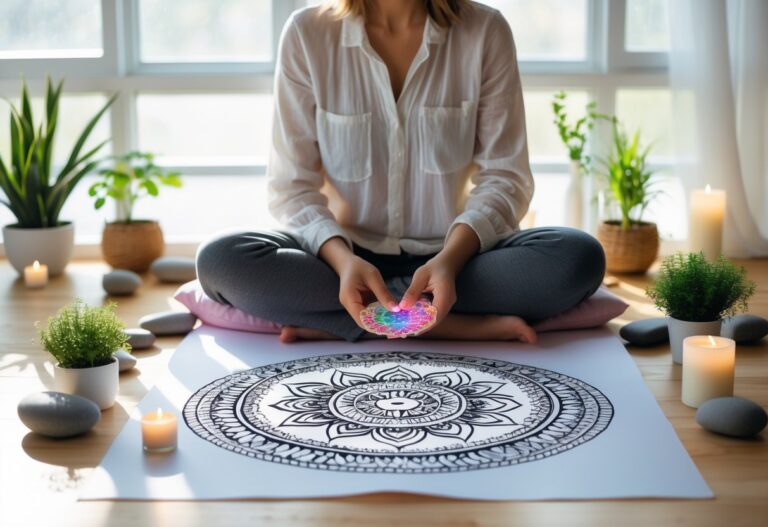
Engaging with mandalas on a regular basis can really support a creative self care routine and, honestly, it does wonders for emotional health. You don’t have to consider yourself an artist—just coloring or doodling mandalas lets you connect with yourself and whatever emotions are floating around.
Maybe try carving out a few minutes each day, or even just once a week, for this little ritual. Use that time to play with moods, experiment with colors you wouldn’t normally pick, or just reflect on how you’ve been growing lately.
This habit might help take the edge off negative thoughts. There’s something about it that can quietly boost your overall sense of well-being.
Keeping a mandala journal is another layer you can add. It lets you track emotional shifts without even realizing it at first.
You might start noticing patterns in your color choices, and those patterns can reveal subtle changes in your mood or mindset over time. That kind of awareness is no small thing—it’s honestly a powerful tool for emotional healing and self care.
In the end, mandala creation isn’t just about making something pretty. It’s a gentle, creative way to check in with yourself and, maybe, feel a little more grounded in the process.
Products Mentioned in This Guide:
Very good i like it
[…] article explores how colour psychology meets practical choices, so you can select shades that fit your light, room purpose, and a […]